Sunday, June 25, 2006

Plasma in the window

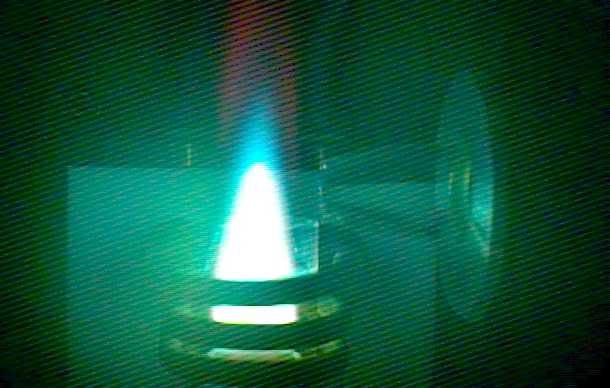
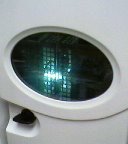
You know a lot of people play Sudoku and work crossword puzzles to exercise their mind. Any chemists out there ever try to draw out syntheses for natural products or any other molecules to gain extra brain power? Here's a shot of the plasma from the lab.

The color of the plamsa is actually white, but the window is tinted green with something that prevents the UV light from harming our eyes. The ultraviolet light is emitted from the metals in the water samples after they gain energy from the plasma. There is actually no reason for the window at all, it just looks cool.


Monday, June 19, 2006

Quality Control Explained

Quality control in ensuring your product, or scientific result falls in between a set of guidelines determined by the necessary amount of accuracy and precision required. It allows a customer to know how reliable a scientific result is.

For instance, say you want to analyze some water samples from off the coast of Louisiana to check if there is any lead contamination because the battery factory was flooded and damaged from a hurricane. To start with, you might want to take samples in various locations and record some type of data like distance from shore and maybe depth of sample taken along with the pH of the water. To tell that the guy or girl sampling the water hasn't contaminated it themselves, they'll need to take some DI water up with their water sampling equipment and bottle that up to go with all the sea water samples.

Then, it'll get back to the lab and it will have to be prepared to be analyzed, the preparer will include another blank with the batch of sea water samples to ensure that he or his lab did not contaminate the samples. These blank samples are representative of the whole batch of samples, if they have any lead in them, then all the other sea water samples would be expected to have the same amount. That's why you gotta keep it all clean, with a mass spec you're usually looking for pretty low amounts.

To be continued... as a series or possibly just a trilogy.


Wednesday, June 14, 2006

Alpha hydroxy garbage

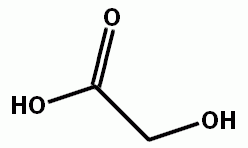
This is kinda funny. After studying organic chemistry, whenever those commercials came on TV about "alpha hydroxys" in skin creams and stuff I would laugh and say that doesn't mean anything. I tried to explain to my girlfriend that the term alpha hydroxy just describes a location on a molecule, like the next carbon over from something has an alcohol bonded to it. In other words, the alcohol (hydroxy) is alpha (next to) something, but you can't really tell what that something is when you say alpha hydroxy.


Glycolic acid

Some of the commercials say "alpha hydroxy acids". This makes much more sense, turnes out, there is a group of molecules called alpha hydroxy acids. And they do have an effect on skin.

Another thing that tickles my fancy is seeing all those little multi-colored beads mixed in and suspended in the face wash or shampoo. That is actually some hot research because just the way it looks sitting on the grocery store shelf makes people buy it. So there were actually scientist out there trying to find out how to suspend little colored balls in a hair gel, making and spending loads of money. It's just the way it goes. Kinda seems like a waste of scientific talent to me, maybe the project only took a couple years.

Next up, beta hydroxy acids.


Friday, June 09, 2006

New calibration standards


Calibration standards have to be made in order for the mass spec to correlate the intensity of the ion signal to concentration. You can't just turn it on and stick a sample in and get a result of 50ppb Cd like on CSI. (A mass spec finds atoms of interest in big piles of random atoms). What would happen if you did that is you would get some random result such as 564,000 CPS (counts per second). When I "calibrate" the instrument by analyzing a 25ppb (10,000CPS), 50ppb (20,000CPS), and 100ppb (40,000CPS) at the beggining of the run, then the instrument knows what 564,000 CPS is. Yes, if you graphed intensity (CPS) vs. concentration (ppb), it would be linear, that's how it works. Technically, 564,000 CPS is obviously overcal in this example and would have to be rerun diluted.
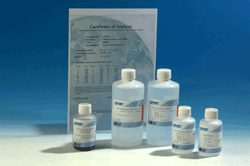


Back to the calibration standards, or multi-element solutions, these are a pain to make. You take bottles off the shelf such as 10,000ppm Sb, it's dissolved in acidified D.I. water from some kind of compound like Sb2O3. You take about 20 to 30 of these bottles off the shelf including things like Tl, Pb, Mn, and Ag. The tricky part is dispensing a very small and precise amount of each element into a 250 or 500mL volumetric flask to arrive at a solution where each element is exactly 50ppb. There is a quite simple calculation to find out how much 10,000ppm Sb to add to a 500mL flask to get 50 ppb. M1*V1 = M2*V2

(10,000ppm Sb)*(x mL) = (0.050ppm)*(500mL)
x = 0.0025mL or 2.5uL
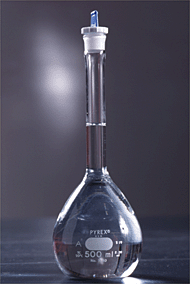


In this case I would have to make an intermediate of say 10ppm and then dilute that down to 50ppb because our pipettes don't go down to 2.5uL.
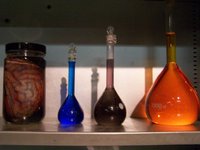


Then I have your basic quality control guidelines and if the solution I made doesn't "pass", it has to be remade. One can see where it can become frustrating. And besides just calibration standards, I need to make a second source calibration check, an interference check solution, as well as all the spiking solutions used in the lab.

Thursday, June 08, 2006

On global warming from a sceptical chemist

I got into a very interesting and controversial conversation while on a trip to Chicago with a jaunt to Green Bay last week.

The topic of global warming came up from someone who believes it is happening and that something must be done about it. I made a little remark about how I was still somewhat sceptical of the whole global warming argument. And the reaction was surprisal, especially me being a scientist and everything. They went on to talk about how scientist views are being put down or hushed by Washington government. That in itself is very alarming and really requires its own post.

It gets real messy when politics get mixed in with science. You really don't know whose views are swayed by whatever. Really, what I think the problem is, I can't find information on the subject that I don't feel has been politically influenced. What I have read is mostly from science articles on the web that are conflicting. That is how it appears to me, is that scientist actually don't agree on global warming.

Instead of commenting about how I know nothing about global warming (I admit, I'm not an expert), please give me a link to some scientific literature about global warming that you believe to be the truth. I mean the facts, some evidence, you know, experimentation. I'll take a sceptical look at computer models.

By the way, I noticed I made an appearance on the Mass Spectrometry Blog.
An interesting blog by a fellow mass spectrometerist.

Cutting edge literature_, Chemistry facts_, Rants and raves_,

Tuesday, May 30, 2006

Everybody should read this


I read a story on Wired news about garage chemistry. I wish they still sold chemistry sets that I thought would be fun to use. Like all the chemicals and equipment necessary to isolate and characterize natural products. I think I would specialize in marine natural products, they don't seem to be a passing fad.

Organic chemistry_, Cutting edge literature_

Thursday, May 25, 2006

The Golden Run

Last night's run was what we analytical chemists call a golden run. This means that all the analytes that I needed to analyze for, for each sample, had the yellow highlighter run over them on the cover page of the lab report. The yellow highlighter means that the result is good to go and I don't need to reanalyze. This has only happened one other time in the year I have been running the mass spec.
Talk about staying steady, the mass spec was on point for at least 12 to 14 hours. Now, sales people for mass specs say their instruments can stay "in cal." for like 2 or 3 days. What they don't tell is they are analyzing nice clean pretty sample in D.I. water. Get some real samples in there with loads of salt or suspended solids and your instrument might not make it past the first sample like that.

In the lab_,

Tuesday, May 23, 2006

Backwards chromatography with Mass Spec


I've been trying to run the FIAS analysis for three days now, the column just doesn't seem to be doing its job. I think the problem might be that I have it backwards. I believe the way the flow should be is into the large end and out the small end. This way, the front of the column will bind the most metals, then, when the flow reverses to rinse the metals off the column with dilute acid, the metals will be at the end of the column, so they come off together.


Sunday, May 21, 2006

More from the blogosphere

I've been reading a few other chemistry blogs around the web.

The Sceptical Chymist
This blog is from the editors of Nature. They have several different authors and many chemstry topics. Somehow they know about In the pipeline and Tenderblog. Powered by Moveable Type.

TotallySynthetic.com
This blog must be from some grad student trying to keep up on "the literature." I do enjoy the review natural product molecules in current literature I can't read about due to enormous subscription fees.

The Endless Frontier

Ph.D student at Harvard.

Interfacial Science
California post-doc.

post doc ergo propter doc
Canadian post-doc.

Check them out and enjoy.

In the blogosphere_

Tuesday, May 16, 2006

Busy as Hell

Sometimes you're waiting around for the chemistry to happen, but I haven't been. It goes like this, I run the mass spec everyday which includes first, turning it on. Sometimes the plasma flickers, arcs, and starts melting the torch. This pisses me off, and it pisses my boss off because they are over $300 bucks. I still use them if they didn't melt all the way through.

Then, I move on to "optimizing" the "signal." This consists of aspirating a "tuning" solution and looking at a real time graph of "intensity" vs. time. And basically, you just move some voltages around to create high intensity of what you want, while creating low intensity for things you don't want.

Getting mid-way throught the morning now, I need to find some time to review the run from last night and prepare all the data in a type of lab report. The best time to start this is right after I start the calibration. I usually see some drift during the first calibration, so I restart it right about lunch time, so the lab keeps working while I'm off the clock.

Getting back from lunch, I have to quickly check the calibration and find some samples to run because there is no point in even thinking of running any samples until I know the instrument is going to work right. So I type in a sample sequence, make sure the QC is kosher, and then start making dilutions for pretty much everything but freshwater samples.

Now it's about 4pm and I have to finish reviewing yesterdays data, make any solutions that need to be made, and deal with email. Then I just schedule the MS to shutdown when it's done, which is usually between midnight and 3 in the morning.


Sunday, May 14, 2006

In my backyard


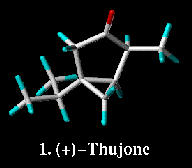
I grow the herb Wormwood in my backyard just because it synthesizes the psychedelic compound Thujone.

These goodies are used to make absinthe.


Thursday, May 11, 2006

Copper in seawater


This is the worst analysis ever, it's called Time Transient Resolved Analysis (TTRA) or Flow Injection Analysis of Seawater (FIAS). The methods are the same, they remove the salt from the seawater so I can measure the concentration of copper. The problem is the flow, there are two pumps, two valves, four lines, a 5mL loop, column, and six way valve, and the flow has got to be steady. A simple calculation reveals 7 to the 10th ways for it to screw up.

I have to use a bunch of para-film to keep the tube joints together because the pump builds up so much pressure in the peri pump tube to push everything throught the column.

The sample flows through a tube, mixes with a buffer (the whole shabang is pH sensitive), and flows onto the column. The metals, including copper and sodium, stick to the resin in the column. The column is rinsed with water, supposedly, the sodium washes off. Then the column is rinsed with diluted nitric acid and the copper comes off and goes into the spectrometer. The metals binding strength to the iminodiacetate resin in the column depends on pH.


Wednesday, May 03, 2006

Mass Spec at home?


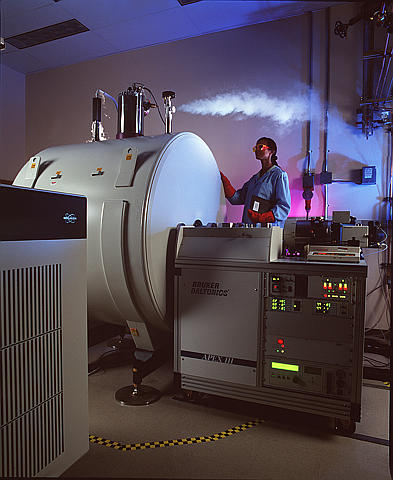
There is a reason why you can't have a mass spec at your house. It's not because it's so big, it's because they cost so much to fix. I had a service technician come out the other day and his visit to fix one part for one day was a cool $25,000. Ya, thats just to fix it. You could buy a pretty nice house for what they can cost new.

Parts break all the time, and you can't just keep running it like a car, a mass spec has to be fully optimized at all times to work properly. The technology is always pushed to the furthest point. If old designers of mass specs stuck with the original design and just improved on it, like a clothes washer, maybe they could last 30 years. But, then it would have run off of DOS.

The picture is not me or the mass spec I run, that thing is huge. And whats with all the multi-colored lights.


Monday, May 01, 2006

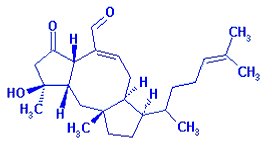
Ophiobolin C


I worked on the synthesis of this molecule while in school at FSU as an undergraduate. It was one of my better academic experiences in Tallahassee. I had my own lab bench, my own glassware, and my own chemicals. I guess it was a taste of graduate school without the 80 hours a week. I met a lot of great people in there; post docs and graduate students who have all dispersed across the world from England to China. When I retire, I'm going to build a
laboratory and make natural products.

Wednesday, April 26, 2006

Plasma goes out

So I'm just calibrating the mass spec after getting it nicely optimized and out of nowhere, the plasma goes out. That basically means I have to start all over again. I could not find a reason for it to go out. The software that runs the instrument just gave this generic error that it displays anytime anything goes wrong. The software has more bugs than Windows 98.

It's not just pushing buttons all day folks, these things happen all the time. At least half my job is troubleshooting. Finding out why the mass spec is doing what it is doing. So, like a computer, I turned it off and then back on, and everything was fine.

Monday, April 24, 2006

DARTs and MS

I'm sure all the mass spec people have heard about this before because it is so cool and also one year old news. It's a new ionization method called DART (direct analysis in real time) invented by Robert B. Cody of JEOL USA and James A. Laramee of EAI Corp. It is a sample introduction system that can be coupled to a mass spectrometer, currently only coupled to a MS by JEOL.
The major difference here, compared to other mass specs, is the sample inlet is at atmospheric pressure. You can hold an object, such as an orange, up in front of the sample cone and get a reading of masses detected and find fungicides.

This technique works by applying an electrical potential to a gas (N2 or H2) to form a plasma that interacts with the sample and the atmosphere.

It took me a minute to picture the instrument layout in my head, I couldn't, so I went to the website. The path of the ion: First, gas is fed in, a plasma is formed, then the instrument opens up to the atmosphere. So, the open region is between the plasma torch and the sample cone. Then, the rest of the mass spec, the one they use happens to be a time-of-flight.

Friday, April 21, 2006

MS at PittCon

Well, I didn't get to go to PittCon, even though it was only a 4 or 5 hour drive from here. And it looks like I missed out on a lot of cool analytical instrumentation as well as possible job leads.
My favorite company Thermo (read with sarcastic tone) introduced a new type of mass spec. In fact, they claim it is "the first totally new mass analyzer to be introduced to the market in more than 20 years." It is called the LTQ Orbitrap mass spectrometer. To read about its initial research, Anal. Chem. 2000, 72, 1156.

Apparently, the orbitrap takes the place of the quadrupole to separate the ions based on m/z. The orbitrap "has ions spinning around a carefully shaped central electrode while shuttling back and forth over its long axis in harmonic motion at frequencies dependent only on their mass-to-charge ratios," says R. Graham Cooks of Purdue University.
More interesting news from PittCon to come.

Sunday, April 16, 2006

Bismuth

Interesting facts about Bi, mass 209 (the only stable isotope), atomic number 83.
It melts at 520 F, maybe possible in the oven.
It boils at 1833 K (2840 F). The ICP plasma I use is 8,000 - 10,000 K.


Not quite as toxic as other elements in the same group, arsenic and antimony. Bismuth is used in cosmetics. And it's in Pepto-Bismol

The most diamagnetic metal, a weak type of magnatism compared to ferro- or paramagnatism. It wouldn't stick to your fridge.

It is used as an internal standard, it is run through the mass spec with every sample at the same concentration, and I make sure the instrument gives the same result. One way to tell if the instrument drifts.
Around $8 / kg.


Tuesday, April 11, 2006

Water droplet

I may have found the answer to my question of why that one drop of liquid always jumps up at me (see previous post), at physicsweb.org/articles/news/10/4/4/1

If I knew how to put the link in, I would.

Blogroll

I finally found out how to write some code and put some more crap on the sidebar over there. It is now cool to put pictures on your blog, relevent to what you're talking about. And if you want to be really cool, you can put clever little captions on the picture for some comic relief.

But seriously, Dylan's blog about synthetic organic grad school life is great. I can now live my dream vicariously through his daily posts. I've been reading In the pipeline written by Derek Lowe for a while now, it's about life as a wonder drug maker in the pharmaceutical industry.

I also found out how to make your blog come into the top ten on Google. Actually, I read about it on some other dude's blog and I forgot his name. I've noticed people are as serious about getting referenced on the internet as in chemistry journals. To get your blog to the top ten, write about something specific, then email all the top read bloggers in that subject and kindly ask them to link your blog. Once you get enough links and enough people coming by, you are one of the first links for that specific subject on a google search. Or maybe that was the way to get more visitors to your blog?

Anyways, pictures are coming, and if I'm in a good mood, clever captions.